Sole Trader Accounts: What You Actually Need to Know
“Would highly recommend David. Professional, understanding and made the whole process straightforward, explaining every step.”
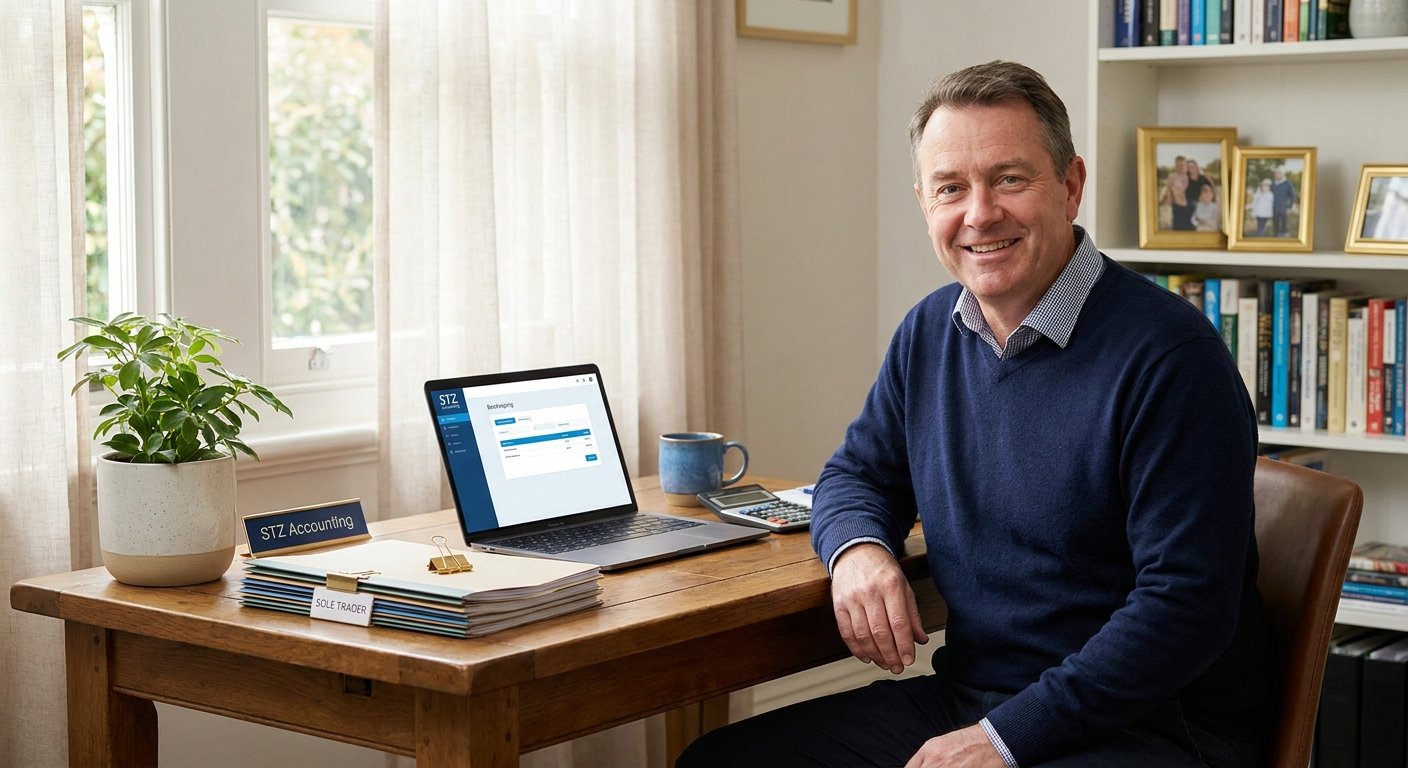
How sole trader accounts actually work is one of those things nobody explains properly until you’re already stressed about it. If you’re sitting there with a pile of invoices and a vague sense that something should have been sorted by now, this is for you.
What Records Do You Actually Need to Keep?
As a sole trader, HMRC requires you to keep a record of all your business income and all your business expenses. That’s the core of it. You don’t need a fancy system to start with, but you do need something consistent.
A lot of people I speak to think they need to have everything perfectly organised in accounting software from day one. You don’t. A spreadsheet with your income in one column and your expenses in another will do the job, especially if you’re just getting started. The important thing is that the numbers are accurate and you’ve kept the receipts to back them up. A photo of a receipt saved to a folder on your phone labelled ‘Business Expenses 2025-26’ is a perfectly reasonable way to store it.
From April 2026, Making Tax Digital for Income Tax requires sole traders earning over £50,000 to use recognised software for digital records and submit quarterly updates to HMRC. If your income is above that threshold, this applies to you now. The threshold drops to £30,000 in April 2027 and £20,000 in April 2028.
What Can You Claim as Expenses?
You can claim any expense that is ‘wholly and exclusively’ for your business. That phrase is HMRC’s, and it means that if something was purely for work purposes, it’s a valid expense. If it was a mix of personal and business use, it gets more complicated and you’d usually only claim the business portion.
Common examples that are often claimable include tools and equipment, mileage if you use your own car for work, a portion of your phone bill, marketing costs, accountancy fees, and any materials or stock you buy to do your job. What trips people up is trying to claim things that were partly personal, or claiming things they genuinely can’t justify if HMRC ever asks. My advice is to keep it clean. If you’re unsure, ask before you claim rather than after.
The Deadlines You Need to Know
The main one most sole traders know about is 31 January. That’s the deadline to file your Self Assessment tax return online and pay any tax you owe for the previous tax year. Miss it and you get an automatic £100 fine, even if you don’t owe a penny in tax. The penalties stack up the longer it goes.
There’s also a second payment on account deadline on 31 July, which catches a lot of people off guard. If your tax bill is above a certain threshold, HMRC splits the payment into two installments. That second one lands in summer and it surprises people who thought they’d paid everything in January. If you’re registered for VAT, you’ll also have quarterly VAT return deadlines on top of all that. And if you’re now in scope for Making Tax Digital, there are four quarterly update deadlines too: 7 August, 7 November, 7 February, and 7 May.
What If You’ve Already Fallen Behind?
This is the thing most people are actually worried about but don’t want to ask. If you’re behind on your records, your tax return, or both, you’re not alone and it’s not the end of the world. HMRC is far more interested in getting things sorted than in punishing people who come forward and get compliant. The longer you leave it, the worse the penalties get, but catching up is always possible.
I’ve helped plenty of people who came to me with a carrier bag of receipts, two years of unfiled returns, and a genuine fear that they’d committed some sort of crime. The reality is almost always less dramatic than the anxiety around it. The practical step is to gather what you have, work out what’s missing, and start from there. If you’re worried about what you might owe, it’s worth getting a proper picture of the numbers before assuming the worst. As the ICAEW notes, unlimited personal liability is a real consideration for sole traders, which is exactly why keeping on top of your tax position matters.
Sole trader accounts aren’t complicated once someone explains them in plain English. If yours have got a bit out of hand, or you just want to make sure you’re doing things right, drop me a message. I’m based in Strathaven and work with sole traders across Scotland and the rest of the UK, all remotely. Happy to have a quick chat and point you in the right direction.
Ready to sort your sole trader accounts?
Whether you want to go away and handle it yourself or you’d rather hand it over to someone you trust, here are two places to go next.
Not sure where you stand with your sole trader accounts?
Answer five quick questions and find out exactly what you need to focus on next.

AAT qualified accountant based in Strathaven. Personal, one-to-one accounting for small businesses and sole traders across the UK.