A Plain-English Guide to Sole Trader Accounts
“Dealing with self assessments and tax returns can be very stressful. But David Roseweir in STZ Accounting made that very simple. He is approachable, efficient and very professional.”
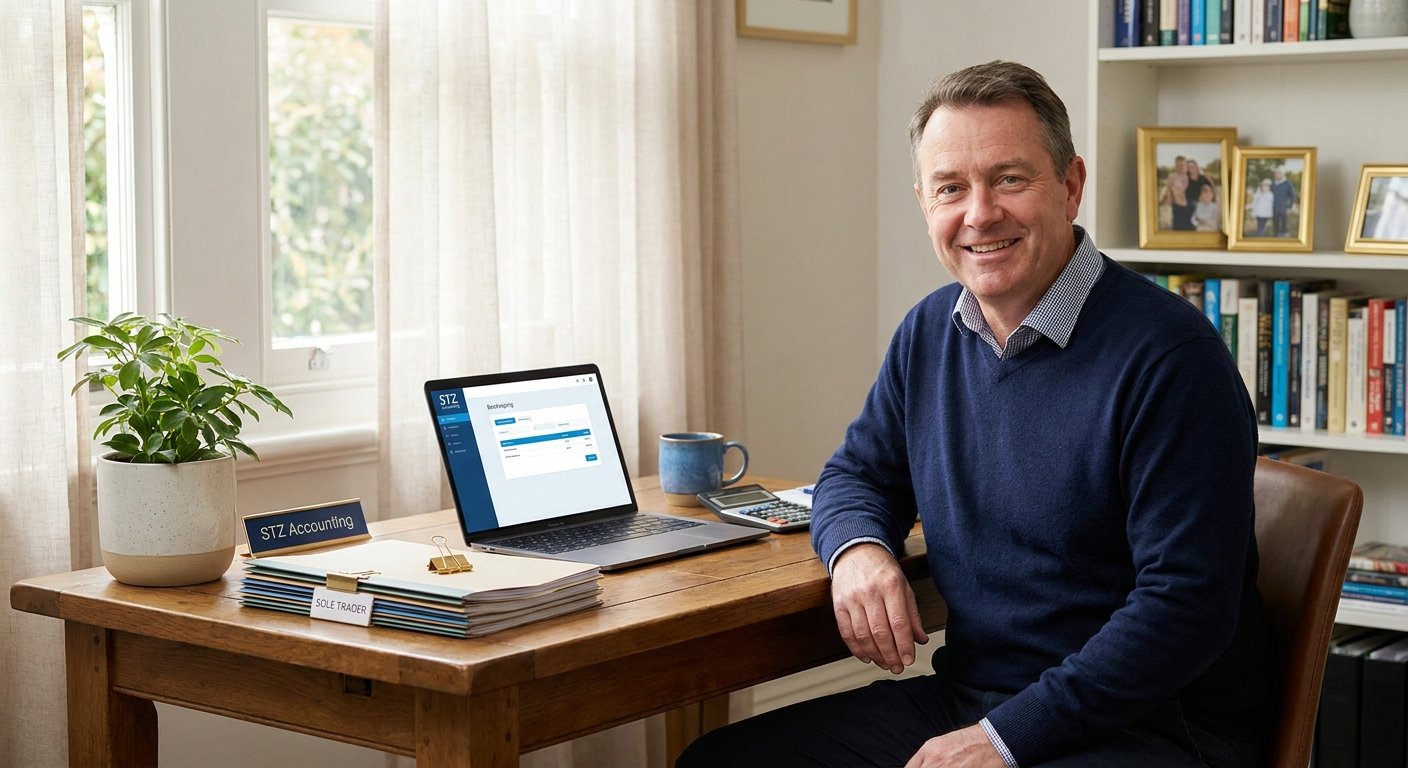
If you are self-employed and unsure whether your records are in good shape, you are not alone — most sole traders find this confusing at first. This guide covers what you legally need to keep, the deadlines that matter, and what to do if you feel behind.
Why sole trader accounts matter more than ever in 2026
Running a business as a sole trader means you are personally responsible for your tax records and filings. HMRC does not accept ‘I forgot’ or ‘I was not sure’ as reasons for missing a deadline, and the penalties for late or inaccurate returns are real. For many sole traders, the moment this sinks in is when they receive an HMRC letter, not before.
The rules are also changing significantly right now. From 6 April 2026, sole traders with income over £50,000 must keep digital records and submit quarterly updates to HMRC under Making Tax Digital for Income Tax (MTD for IT). This is a bigger shift than a single annual return, and it catches many people off guard. If your income is between £30,000 and £50,000, the same rules apply from April 2027.
Under Making Tax Digital for Income Tax, quarterly update deadlines fall on 7 August, 7 November, 7 February, and 7 May each year. Miss enough of them and HMRC applies a points-based penalty system, with a £200 fine triggered after four points. The first 12 months after joining MTD carry no penalty points, but that grace period runs out fast.
Where most sole traders go wrong
The most common accounting problems are not caused by complicated situations. They come from a handful of simple habits that quietly create bigger headaches over time. Knowing what these are makes them easier to avoid or fix.
Mixing personal and business money
Using a personal bank account for business income and expenses is one of the most frequent issues. It makes it very hard to work out your actual profit, and it can create questions from HMRC about which transactions were business-related. Opening a separate bank account for your business, even a free one, solves this problem completely.
Not keeping receipts or records
You do not need a filing cabinet. A photo of a receipt saved into a folder on your phone labelled ‘Business Expenses 2025-26’ is enough to support a claim. What you cannot do is claim an expense you cannot evidence. HMRC can go back up to four years for an inquiry, so keeping records for at least five years after the filing deadline is the safest approach.
“Most sole traders I speak to are not behind because they are disorganised. They are behind because nobody ever clearly explained what they were supposed to do and when. Once that is clear, the backlog usually sorts itself out faster than people expect.”
What to do, step by step
Getting your sole trader accounts in order does not require specialist knowledge, but it does require consistency. The steps below reflect the process that works for most self-employed people, whether you are just starting out or trying to catch up after falling behind.
- Register for Self Assessment with HMRC if you have not already done so. You must register by 5 October in the second tax year of trading. For example, if you started trading in the 2024-25 tax year, your registration deadline was 5 October 2025. If you have missed this, register now and HMRC will note the date.
- Keep a record of every business income payment and every allowable expense throughout the tax year. A spreadsheet works for most sole traders below the MTD threshold. If your income is over £50,000, you must now use HMRC-recognised software to maintain digital records and submit quarterly updates. HMRC does provide free software options for those who qualify.
- File your Self Assessment tax return by 31 January each year for the previous tax year. So for the 2025-26 tax year, your return and any tax owed is due by 31 January 2027. If your tax bill is over £1,000, HMRC will also ask for payments on account in July and January. Many sole traders are caught out by this the first time it happens.
If you are behind on any of the above, the practical answer is to start from where you are. Gather what records you have, make a note of what is missing, and work forward. An accountant can help reconstruct records and deal with HMRC on your behalf if you have lost receipts or missed a previous filing.
Costs and what to realistically expect
The honest question most sole traders ask is whether they need to pay an accountant or whether they can do this themselves. The answer depends on your income level, how confident you are with numbers, and how much time you want to spend on it. With MTD for Income Tax now requiring quarterly submissions for higher earners, the admin load is increasing, and that changes the calculation for a lot of people. STZ Accounting’s sole trader package starts at £150 plus VAT per month and covers bookkeeping, bank reconciliation, VAT returns, annual accounts, and your personal Self Assessment return.
| Option | Pros | Cons |
|---|---|---|
| Do it yourself | No monthly fee, direct control over your records | Time-consuming, higher risk of errors, no one checks your work before submission |
| Use an accountant | Accurate filings, all deadlines tracked for you, someone to ask when you are unsure | Monthly or annual fee, requires you to share financial information regularly |
How to get started today
You do not need to have everything perfect before you speak to an accountant or take the first step yourself. The best thing you can do right now is get a clear picture of where you stand. That means two things: knowing what records you have and knowing what is still missing.
- Open a folder on your phone or computer called ‘Business Records [current tax year]’ and add every receipt, invoice, and bank statement you can find from this tax year. It does not need to be organised yet, it just needs to exist in one place.
- Check whether you are registered for Self Assessment and, if so, log into your HMRC online account to confirm your last return was submitted and no outstanding payments are showing. If you are not registered and you earned over £1,000 from self-employment this tax year, register now at gov.uk.
Ready to sort your sole trader accounts?
STZ Accounting’s sole trader package covers bookkeeping, annual accounts, and your Self Assessment return for a fixed monthly fee with no tie-in. Book a free call and David will explain exactly what is included and what it will cost.
Are your sole trader records where they need to be?
Answer five quick questions and get a clear picture of your next step.

AAT qualified accountant based in Strathaven. Personal, one-to-one accounting for small businesses and sole traders across the UK.