What Is Making Tax Digital and Does It Affect Your Business?
“David is exceptional. Over my years in business I have worked with several accountants for different projects. David is quick, efficient & his price is excellent value for money. I highly recommend him.”
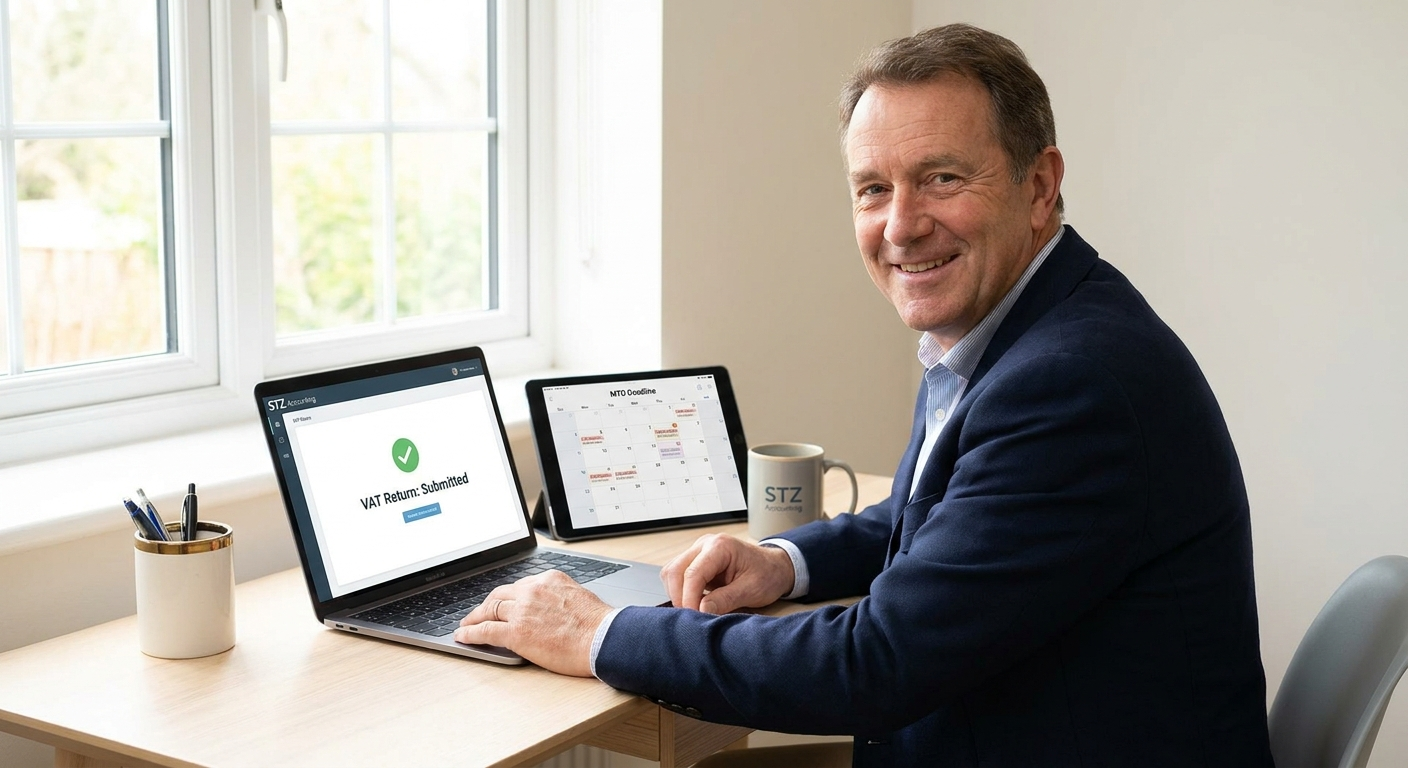
What is Making Tax Digital, and should you be worried about it? The short answer is: it’s a real change, it will affect most small businesses in the UK at some point, and the earlier you understand it the less stressful it becomes.
What Making Tax Digital Actually Means
Making Tax Digital, or MTD, is HMRC’s push to move tax record-keeping and reporting away from paper, spreadsheets and manual submissions, and into compatible digital software. The idea is that businesses keep their records digitally throughout the year and submit information to HMRC through approved software. It’s not one big switch that happens overnight. It’s been rolling out in phases over several years.
If you’re VAT-registered, you’re already in scope. Since April 2022, all VAT-registered businesses have been required to keep digital records and submit their VAT returns through MTD-compatible software. If you’ve been doing that, you’re already part of the system. The next phase affects self-employed people and landlords, and that’s where a lot of people are only just starting to pay attention.
MTD for VAT is not optional for VAT-registered businesses. If you’re still submitting your VAT return manually through the old HMRC portal, you need to sort this now. It’s worth checking with your accountant if you’re not sure whether your current setup is compliant.
Who Does It Affect and When?
For Income Tax, the rollout is tied to how much you earn. Making Tax Digital for Income Tax Self Assessment became mandatory from 6 April 2026 for sole traders and landlords with qualifying income above a certain threshold. If you haven’t already had a letter from HMRC or a conversation with your accountant about this, it’s worth checking whether your income puts you in scope right now.
The threshold is also being extended further. From April 2028, the mandation threshold drops from £30,000 to £20,000, pulling in more self-employed individuals and landlords. If you’re earning anywhere near that level and haven’t started planning yet, now is a sensible time to do it.
What Does MTD Actually Change Day to Day?
The biggest shift for most people is moving to quarterly reporting. Instead of one Self Assessment tax return a year, you’ll submit a summary of your income and expenses to HMRC every three months. You then file an end-of-year declaration to confirm the figures. It sounds like more work, but if your records are kept up to date through the year, each quarterly submission is usually pretty straightforward.
The other change is the software requirement. You can’t just use a spreadsheet on its own anymore. You need software that connects directly to HMRC’s systems, like Xero, QuickBooks or FreeAgent. Some people find this genuinely easier once they get going. Others find the setup tricky, which is exactly why a lot of sole traders and landlords are asking their accountants to handle it for them rather than figuring it out alone. That’s a perfectly reasonable approach.
What Happens If You Ignore It?
HMRC has a points-based penalty system for MTD non-compliance. Miss a quarterly submission and you collect a penalty point. Collect enough points and a financial penalty follows. The penalties aren’t catastrophic for a first missed deadline, but they add up, and HMRC’s direction of travel is clearly towards stricter enforcement over time. It’s not the kind of thing worth ignoring and hoping it goes away.
There are also practical risks beyond the fines. Businesses that leave their bookkeeping in a mess and then try to pull it together quarterly tend to make mistakes. Those mistakes can trigger HMRC enquiries. Keeping things tidy through the year, which MTD essentially forces you to do, actually reduces that risk. That’s one of the genuine benefits of the system, even if the transition feels like a hassle.
If you’re sitting there thinking ‘I need to sort this but I don’t know where to start’, that’s exactly the kind of conversation I have with people all the time. Drop me a message or book a free call and we’ll work out where you are and what needs to happen next.
Want to go deeper on Making Tax Digital?
Whether you want to read through everything yourself or just want someone to take it off your hands, here are two useful next steps.
Not sure if Making Tax Digital applies to you yet?
Answer a few quick questions and find out exactly where you stand and what to do next.

AAT qualified accountant based in Strathaven. Personal, one-to-one accounting for small businesses and sole traders across the UK.