What Is Cash Flow Forecasting and Why Does Your Business Actually Need It?
“David is exceptional. Over my years in business I have worked with several accountants for different projects. David is quick, efficient & his price is excellent value for money. I highly recommend him.”
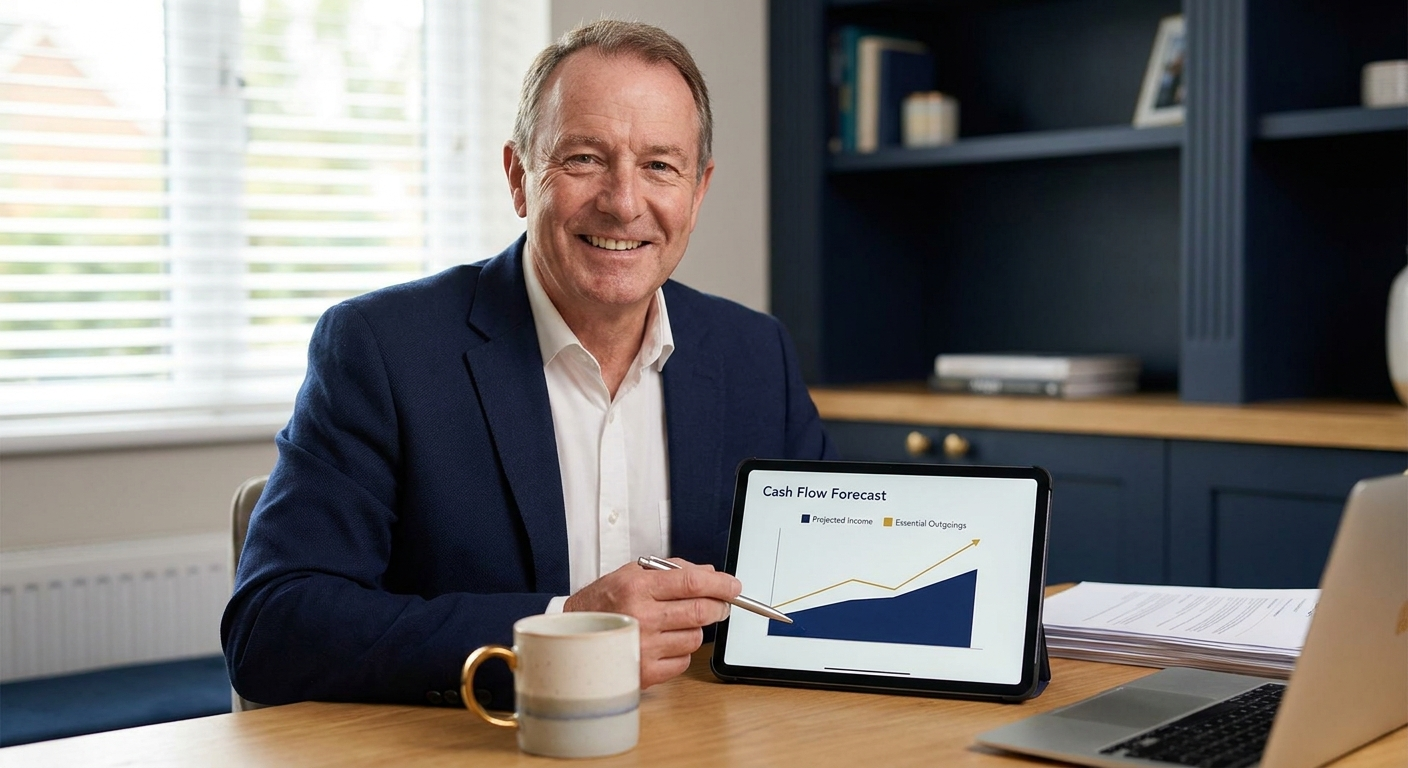
What is cash flow forecasting? It’s simply a way of looking ahead at the money moving in and out of your business, so you’re not constantly reacting to problems that a bit of planning could have flagged weeks earlier.
What Cash Flow Forecasting Actually Means
Cash flow forecasting is the process of estimating how much money you expect to receive and spend over a future period, usually broken down month by month. It’s not the same as your profit and loss. A business can be profitable on paper and still run out of cash, because profit doesn’t tell you when the money lands in your account.
A forecast maps the timing. You might know a client owes you £8,000, but if they’re paying in 60 days and your wages go out in two weeks, that gap matters. That’s the kind of thing a cash flow forecast is designed to show you before it becomes a crisis.
According to data on HMRC’s Time To Pay guidance, HMRC itself requires a cash flow forecast covering at least three months beyond any payment plan end date when businesses apply to spread a tax debt. If HMRC wants to see one, it’s fair to say your business probably should have one too.
Why So Many Small Businesses Get Caught Out
The honest truth is that most small business owners are running on feel rather than facts. They have a rough sense of what’s in the bank today, maybe a mental note of what’s due in, and that’s about it. Research suggests more than a quarter of UK SMEs hold cash reserves that would sustain them for two months or less, and around 60% report that outflows outpace inflows for at least half the year. That’s not a niche problem. That’s the norm.
Part of the issue is that many businesses only look at their cash position annually, or skip the process entirely. By the time a problem shows up in the bank account, your options for fixing it are already limited. A forecast gives you time to act, whether that’s chasing an invoice earlier, delaying a purchase, or arranging a short-term facility before you actually need one.
What a Cash Flow Forecast Actually Shows You
A well-built cash flow forecast shows you three things clearly: your opening balance each month, all the money you expect to come in, and all the money you expect to go out. What’s left at the end of each month is your closing balance, and that number tells you whether you’re heading into safe ground or toward a shortfall.
On average, UK SMEs are owed around £22,000 in outstanding invoices at any given time. When you factor in late payments, VAT bills, payroll, supplier costs and tax deadlines all landing in the same window, you can see why a clear picture of timing matters so much. A good forecast doesn’t just tell you how much. It tells you when.
When It Makes Sense to Get Professional Help
There’s nothing wrong with starting with a simple spreadsheet. But for a lot of businesses I speak to, the spreadsheet either never gets built or gets abandoned after a few months because keeping it accurate takes time they don’t have. The value of having someone else manage your forecast is consistency, and the fact that it’s done properly every month rather than only when you’re worried.
A cash flow forecast is also increasingly useful if you’re applying for finance, approaching a bank, or trying to show a potential investor that you know your numbers. It’s a credibility document as much as a planning tool. And if you ever need to negotiate a payment plan with HMRC, having a forecast already in place puts you in a much stronger position from the start.
I’ve spent over 25 years working in and around businesses before I qualified as an accountant, and the pattern I’ve seen repeated more times than I can count is good businesses getting into unnecessary trouble because they couldn’t see what was coming. A cash flow forecast won’t prevent every problem, but it gives you a fighting chance. If you want to talk through your situation, just drop me a message or book a call.
Want to go further with this?
Here are two places to go next depending on where you are right now. One is a practical guide for building your own forecast. The other is an overview of how I can do it for you.
Not sure if your cash flow is under control?
Answer five quick questions and find out where the gaps are in your current financial planning.

AAT qualified accountant based in Strathaven. Personal, one-to-one accounting for small businesses and sole traders across the UK.