A Plain-English Guide to Making Tax Digital Accounting
“Would highly recommend David. Professional, understanding and made the whole process straightforward, explaining every step.”
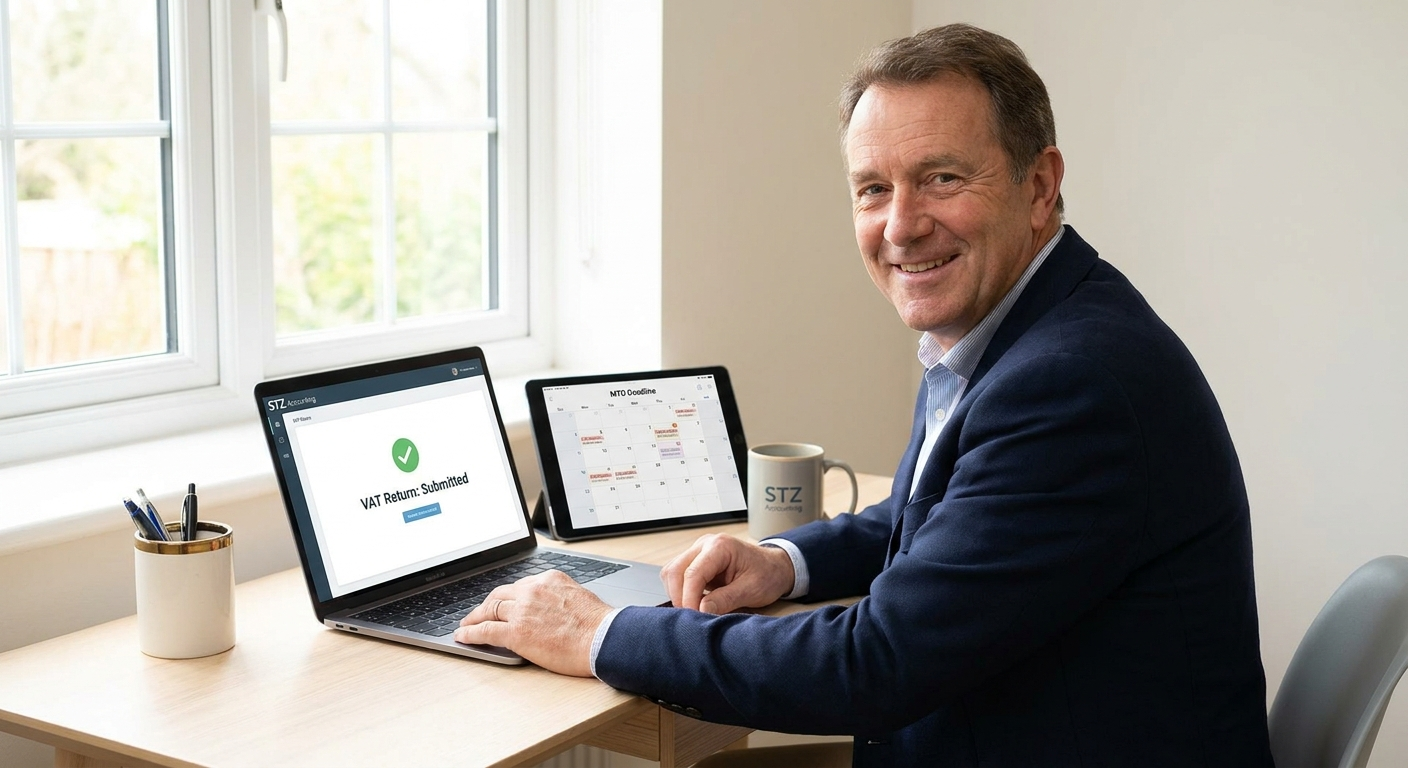
Making Tax Digital is changing how sole traders, landlords, and small businesses report their income to HMRC, and the deadlines are closer than most people realise. This guide explains what MTD means in practice, who it affects right now, and what you need to do to avoid falling behind.
Why Making Tax Digital matters for your business right now
Making Tax Digital is not a future proposal. Since April 2022, every VAT-registered business in the UK has been legally required to keep digital records and file VAT returns through MTD-compatible software. If your business is VAT-registered and you are still using spreadsheets or paper records, you are already non-compliant.
For sole traders and landlords, MTD for Income Tax became mandatory from 6 April 2026 for those with total qualifying income above £50,000. The threshold drops to £30,000 from April 2027. From April 2028, HMRC has confirmed it will extend the mandate further to anyone earning over £20,000. If your income is growing, this will apply to you sooner than you expect.
Under MTD for Income Tax, you will need to submit quarterly updates to HMRC instead of a single annual Self Assessment return. That is four digital submissions per tax year, plus a final end-of-year declaration. This is a significant change to the way most sole traders and landlords currently report their income.
Where most people go wrong with Making Tax Digital
UK business forums and SME communities have flagged that the real-world admin burden of MTD is heavier than many businesses anticipated. The most common problems are not about software choice. They are about habits and timing.
Waiting until the deadline to get the software in place
MTD-compatible software needs to be set up, connected to your bank, and actively used before your first quarterly submission date. Leaving this until the week before means you have months of records to reconstruct digitally in a hurry. That takes time you do not have and creates a high risk of errors in your first submission.
Assuming your current accountant has already sorted it
Many sole traders assume their accountant is handling MTD compliance on their behalf. In practice, your accountant can only submit what you give them. If your record-keeping has not moved to a compatible digital system, your submissions will be inaccurate regardless of who files them. The responsibility for maintaining digital records sits with you, not your accountant.
“Most of the clients I see who are worried about MTD are not behind on the big things. They have been recording income and expenses faithfully for years. The issue is usually that the format of those records does not meet HMRC’s digital requirements yet. That is a fixable problem, and it rarely takes as long to sort out as people fear.”
What to do with Making Tax Digital, step by step
Getting compliant does not have to be a lengthy project. Most businesses can complete the essential setup in a few hours once they know what they are doing. Here is a practical sequence to follow.
- Step 1 – Check whether MTD applies to you right now. If your business is VAT-registered, MTD for VAT already applies and you must be using compatible software. If you are a sole trader or landlord, check your total qualifying income for the previous tax year. If it exceeded £50,000, MTD for Income Tax applied from April 2026. If you are unsure, your Self Assessment return history is the place to start.
- Step 2 – Choose HMRC-recognised software and connect it to your bank. HMRC publishes a list of approved MTD-compatible software. Options range from full bookkeeping platforms to simpler bridging tools. The right choice depends on your turnover, whether you are VAT-registered, and how much you want to manage yourself. Once chosen, connect your business bank account so transactions can be categorised digitally from the point of entry.
- Step 3 – Set up quarterly submission reminders and stick to them. Under MTD for Income Tax, your four quarterly update deadlines fall on 7 August, 7 November, 7 February, and 7 May each year. Missing a quarterly update can result in HMRC issuing penalty points, and accumulating points leads to financial penalties. Put these dates in your calendar now, or ask your accountant to track and file them on your behalf.
Working with an accountant who already handles digital record-keeping and quarterly submissions means you hand over the data and they handle the rest. STZ Accounting manages bookkeeping, VAT returns, and Self Assessment for clients across Scotland and the UK, all done remotely with same-day communication when questions arise.
Costs and what to expect from Making Tax Digital accounting
The costs associated with MTD depend on whether you handle it yourself or work with an accountant. Software subscriptions for MTD-compatible platforms typically range from around £12 to £35 per month for sole traders, depending on the features you need. If you bring in an accountant to manage bookkeeping and quarterly submissions on your behalf, this is usually included within a fixed monthly fee. At STZ Accounting, the sole trader package starts from £150 plus VAT per month and covers bookkeeping, bank reconciliation, VAT returns, annual accounts, and Self Assessment, so there are no separate line items for MTD compliance.
| Option | Pros | Cons |
|---|---|---|
| DIY with software only | Low monthly software cost, direct control over your records | You are responsible for accuracy, quarterly deadlines, and staying current with HMRC rule changes |
| Working with an accountant | Quarterly submissions filed on time, records kept accurate, questions answered fast | Monthly fee applies, though fixed pricing means no surprise invoices |
How to get started with Making Tax Digital today
The two things that stall most businesses on MTD are not knowing exactly what applies to them and not knowing which software to choose. Both are easier to resolve than the volume of online guidance suggests. Start with the steps below, and if you want someone to check your specific situation before you commit to anything, book a free call with David at STZ Accounting.
- Log in to your HMRC online account and check your most recent income figures against the current MTD thresholds. If your total qualifying income from self-employment and property exceeded £50,000 in the 2024 to 2025 tax year, MTD for Income Tax is mandatory for you from April 2026.
- If you are already VAT-registered, check that your current accounting software appears on HMRC’s published list of MTD-compatible products. If you are using spreadsheets or manual records for VAT, you need to move to compatible software without delay.
Ready to sort your MTD compliance?
David handles digital bookkeeping, quarterly MTD submissions, VAT returns, and Self Assessment on a fixed monthly fee with no tie-in and no hidden charges. Book a free introductory call and find out exactly what applies to your situation.
How prepared is your business for Making Tax Digital?
Answer five quick questions and get a clear next step based on your current setup and income level.

AAT qualified accountant based in Strathaven. Personal, one-to-one accounting for small businesses and sole traders across the UK.