A Plain Guide to Filing a VAT Return in the UK
“Would highly recommend David. Professional, understanding and made the whole process straightforward, explaining every step.”
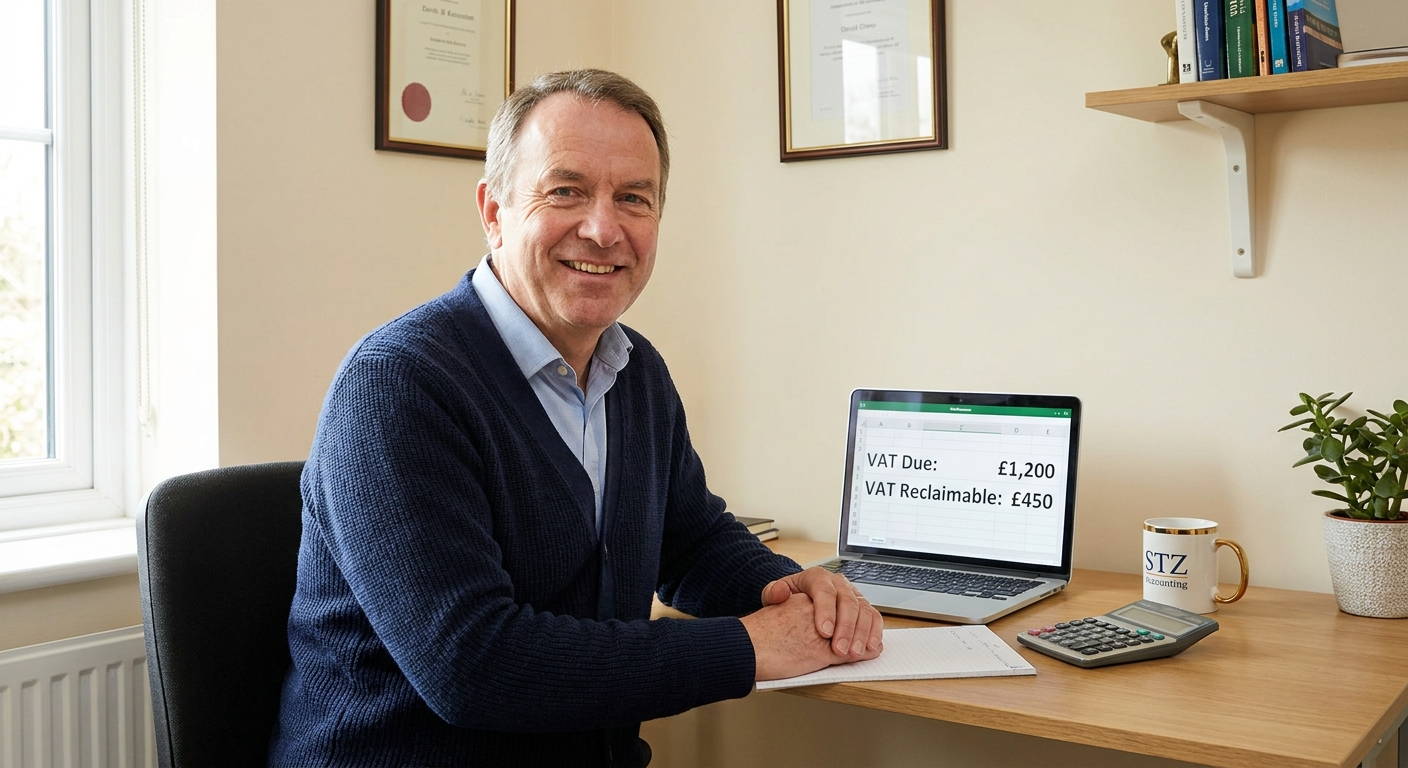
If your business turnover has crossed the £90,000 VAT threshold, filing accurate, on-time VAT returns is now a legal obligation, and the penalty system has teeth. This guide walks you through what VAT returns involve, where people go wrong, and what a straightforward filing process looks like.
Why VAT returns matter more than ever in 2026
The VAT registration threshold sits at £90,000 in 2026. Once your annual turnover crosses that figure, you are legally required to register for VAT, charge it on eligible sales, and file returns, typically quarterly, through HMRC. There is no grace period and no size exemption.
Making Tax Digital for VAT has been mandatory for all VAT-registered businesses since April 2022. From 1 April 2026, the requirement tightened further: every VAT-registered business must keep digital records using HMRC-compatible software and submit returns through a digital link, with no manual workarounds permitted. If your current process involves copying figures into the HMRC portal by hand, it is no longer compliant.
Under the current points-based penalty system introduced in January 2023, each late VAT submission earns a penalty point. Once your threshold is reached, HMRC issues a £200 fine. Penalties for deliberate understatement of VAT can reach 100% of the VAT owed. Around one in five businesses reported difficulty submitting returns on time, according to HMRC’s own research published in March 2026.
Where most people go wrong with VAT returns
The majority of VAT errors are not caused by dishonesty. They come from disorganised records, misunderstanding of VAT rules, and leaving the filing too close to the deadline. Common VAT return mistakes include miscalculations and missed deadlines, both of which are avoidable with the right process in place from the start.
Claiming VAT on non-business or exempt purchases
Personal expenses mixed with business spending is one of the most frequent causes of incorrect VAT claims. If you are reconciling bank statements yourself and not separating personal and business transactions, the chances of an error on your return are high. HMRC can investigate back several years if they identify a pattern of overclaimed input VAT.
Filing outside the Making Tax Digital rules
MTD for VAT requires digital records and a digital link between your accounting software and the HMRC submission. Manually re-keying figures, even from a spreadsheet, is not MTD-compliant unless that spreadsheet connects to bridging software. Many small business owners are unknowingly non-compliant and would not know until HMRC flags it.
“Most of the VAT problems I deal with did not start as deliberate errors. Someone was busy, their records were behind, and they filed the best figures they had. HMRC does not distinguish between careless and deliberate when it issues penalty points. Getting your process right from the start is far easier than correcting it later.”
How to file a VAT return: step by step
The filing process itself is straightforward when your records are in order. The pressure comes from getting everything organised before the deadline, which is usually one month and seven days after the end of your VAT period. Here is what a clean, compliant process looks like.
- Step 1 – Keep digital records throughout the quarter. Use HMRC-compatible software such as QuickBooks, Xero, or FreeAgent to record every sale and purchase as it happens. Do not batch-enter at the end of the quarter. This gives you a clean, accurate picture when it comes to filing.
- Step 2 – Reconcile your records before the deadline. Check that your bank statements match your software, that all receipts are accounted for, and that you have not included any personal or exempt purchases in your VAT calculations. If you are using an accountant, send your records at least two weeks before the filing date.
- Step 3 – Submit through MTD-compatible software or authorise your accountant as your HMRC agent to file on your behalf. Your return must be submitted digitally via a digital link, not manually entered into the HMRC portal. Once submitted, pay any VAT owed by the payment deadline, which is the same date as the filing deadline for most businesses.
If your records are not in order when you come to file, do not guess. An error on a VAT return can attract a correction penalty on top of the original bill. If you are unsure about a specific transaction, flag it and check before submitting.
Costs and what to expect
Filing VAT returns yourself is technically possible if your records are clean and your software is MTD-compatible. The risk is that a single error, an incorrect exemption claim, a missed input VAT entry, or a late submission, can cost more than a year of accountant fees. At STZ Accounting, VAT return preparation and filing is included in fixed monthly packages, so there is no separate bill per quarter and no surprise invoices.
| Option | Pros | Cons |
|---|---|---|
| DIY filing | No accountant fee for the return itself | High risk of MTD non-compliance, calculation errors, and missed deadlines that trigger penalty points |
| Using an accountant | Accurate filing, deadline tracked for you, HMRC queries handled on your behalf | Monthly or quarterly fee, though typically less than one HMRC penalty |
How to get your VAT returns sorted today
If your next VAT deadline is approaching, the practical first step is to get your records into one place. You do not need everything to be perfect before you speak to an accountant. David works with clients whose books are in good shape and with clients whose records are a spreadsheet and a folder of receipts. The starting point is always the same: a short call to understand your situation.
- Locate your last filed VAT return and note the period end date. This tells you when your next return is due and how much time you have.
- Book a free call at stzaccounting.co.uk/discovery-call/ to discuss your VAT situation, your current software setup, and what a fixed-price quarterly service would involve for your business.
Ready to sort your VAT returns?
David prepares and files VAT returns for sole traders, limited companies, and contractors at a fixed price, with no tie-in and same-day responses included as standard. Book a free 20-minute call and have your next quarterly deadline covered.
Is your VAT process MTD-compliant and penalty-proof?
Answer five quick questions and get a personalised next step for your VAT filing setup.

AAT qualified accountant based in Strathaven. Personal, one-to-one accounting for small businesses and sole traders across the UK.